Meta is reportedly considering laying off 20% of its workforce
PLUS: How to write system prompts that change everything

Welcome back to The Breakdown AI.
This week had a bit of everything.
Meta is eyeing layoffs that could affect 1 in 5 employees, Elon Musk admitted xAI was not built right and is starting over, Anthropic is quietly building a business empire while fighting the US government in court, and behind the scenes, Amazon and Microsoft just revealed they cannot keep up with Google on AI infrastructure.
A lot to unpack. Let's go………
Here’s what we’re covering today:
Meta is reportedly considering laying off 20% of its workforce
Musk admits xAI was built wrong and is rebuilding from scratch
Anthropic is in talks to launch a major AI joint venture with private equity
AWS and Microsoft just showed Google how far ahead it really is
How to write system prompts that change everything
Trending AI tools you should know about
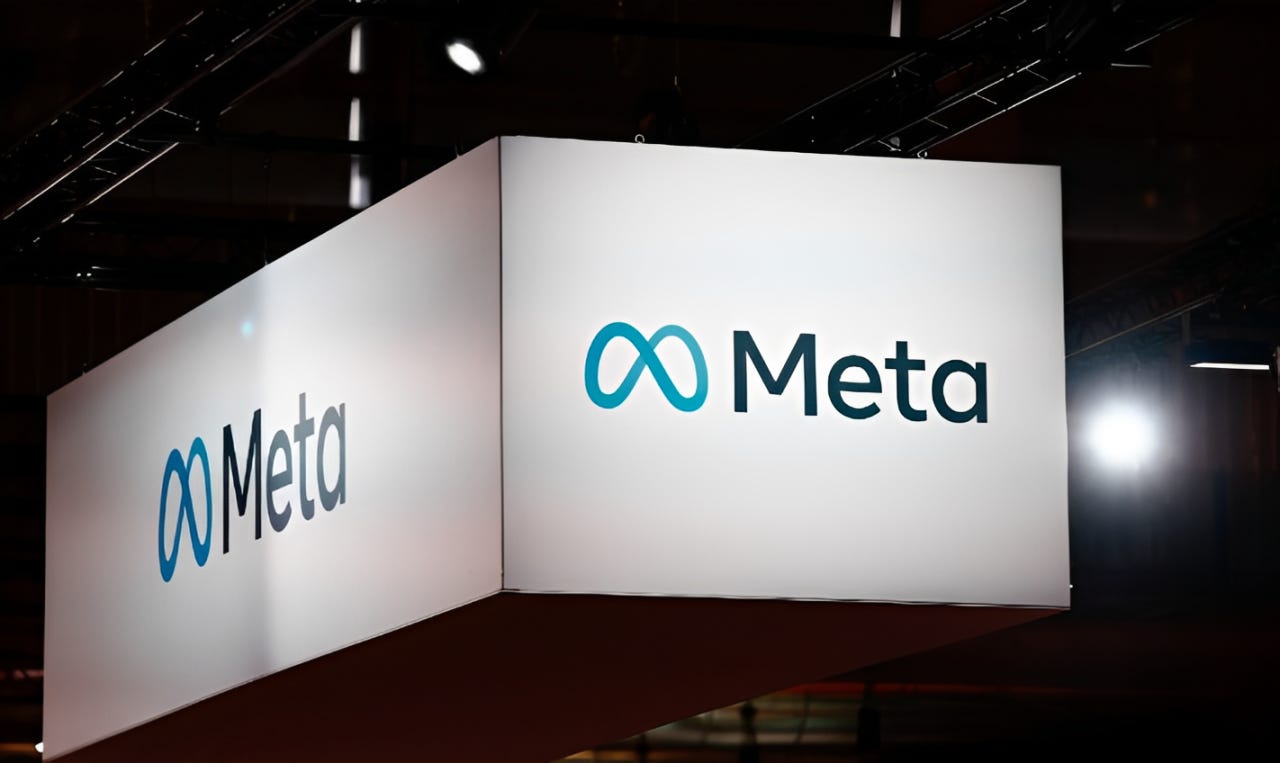
Meta reportedly considering layoffs that could affect 20% of its workforce
Meta is weighing layoffs that could cut 20% or more of its roughly 79,000 employees, according to Reuters.
The move would help offset the company's aggressive spending on AI infrastructure, acquisitions, and hiring.
Meta called the report speculative, but this would be the largest round of cuts since its back-to-back layoffs in late 2022 and early 2023.
The Breakdown: The timing matters.
Tech companies across the board have been announcing cuts and pointing to AI as the reason, with Sam Altman himself calling some of it AI-washing, where AI becomes the excuse for decisions that were really about over-hiring during the pandemic.
Meta spent years building out its headcount, then pivoted hard into AI infrastructure spend.
Something had to give, and it looks like headcount is what gives.
Why it matters: If this happens at the scale being reported, it will be the most visible example yet of a major tech company visibly trading human labor for AI investment. Whether that is genuinely driven by automation or just balance sheet management, the story it tells the market is the same: AI is replacing jobs at the top of the industry, not just the bottom.

Musk admits xAI was not built right and is rebuilding from scratch
Only two of the original eleven co-founders of xAI remain.
Elon Musk publicly acknowledged the company was not built right the first time and said it is being rebuilt from the ground up.
The immediate trigger was xAI falling behind on AI coding tools, which Musk sees as the key revenue category.
SpaceX and Tesla executives have been brought in to evaluate and cut staff.
Meanwhile, xAI's Macrohard project, an ambitious AI agent initiative, has been put on pause.
The Breakdown: The core problem is not drama or dysfunction for its own sake. It’s that coding tools are where enterprise AI money is concentrated right now, and xAI is losing that race to Claude Code and OpenAI’s Codex.
That gap is a revenue problem.
At the same time, Grok’s early user spike was largely driven by loose content moderation and is not a sustainable growth engine.
So, the product that drives revenue is lagging and the product that drove users is a liability. That’s a rough spot to be in.
Why it matters: For xAI to matter in this industry, it needs to win on coding or on agents, and right now it’s behind on both. Musk is betting he can catch up by mid-year. That is an ambitious timeline given that he is simultaneously rebuilding the team, restarting the Macrohard project with Tesla, and navigating the pressure of a potential SpaceX IPO that would put xAI’s performance under a microscope.

Anthropic in talks to launch an AI joint venture with Blackstone and other private equity firms
Anthropic is in early discussions with Blackstone and Hellman and Friedman to form a joint venture that would deploy Claude across thousands of portfolio companies.
The model is inspired by Palantir, pairing software with hands-on consulting to help companies actually implement the technology.
This comes as Anthropic is simultaneously fighting the US government in court over its Pentagon supply chain risk designation, with CFO Krishna Rao stating the dispute could cost the company multiple billions in 2026 revenue.
The Breakdown: This is a smart strategic move regardless of how the Pentagon situation resolves.
Private equity firms like Blackstone manage trillions in assets across thousands of portfolio companies in real estate, healthcare, finance, and industrial sectors.
A structured distribution channel into that ecosystem would give Anthropic enterprise reach that no amount of direct sales headcount could replicate.
The Palantir comparison is telling too since Palantir built a durable business on exactly this model.
Why it matters: Anthropic is playing two games at once. In public it is fighting for its principles on the government side. In private it is quietly building the commercial infrastructure to make itself too valuable to ignore. Claude Code already crossed $2.5 billion in annualized revenue, more than doubling since the start of the year. A private equity distribution deal at this stage would accelerate that significantly.

AWS and Microsoft both admitted this week they cannot keep up with Google on AI inference
Within 48 hours, AWS announced a partnership with chip startup Cerebras to handle the most demanding part of AI inference, and Microsoft licensed an inference engine from Fireworks AI for its Azure Foundry platform.
Neither company framed it as a concession, but both moves were exactly that. Google, by contrast, built its own custom silicon for this problem over seven generations and needed neither fix.
The Breakdown: The technical issue is that modern reasoning models generate output token by token in a way that standard GPU infrastructure handles inefficiently.
AWS had to bring in Cerebras for its specialized chip. Microsoft had to license Fireworks for its serving speed.
Google designed its Ironwood TPU chips specifically for this workload years in advance and already had the answer before most people understood the question.
That kind of infrastructure lead does not appear overnight, and it does not disappear quickly either.
Why it matters: For anyone building serious AI products, this is worth tracking. The platform you build on affects the speed, cost, and reliability of your AI in ways that are not obvious until you are running at scale. Google’s infrastructure advantage is becoming increasingly concrete just as enterprise AI budgets are growing. That is a competitive position that will compound.
HOW TO WRITE SYSTEM PROMPTS THAT CHANGE EVERYTHING
Most people treat AI like a search bar.
Type something in, get something back.
That works for simple tasks but it’s leaving most of the value on the table.
The thing that separates people who get consistently great results from AI and people who get mediocre ones is the system prompt.
A system prompt is an instruction you give the AI before any conversation starts. It sets the rules, the role, the tone, and the constraints.
Think of it as the difference between hiring a random contractor off the street and giving a properly briefed specialist a clear brief before they start work.
Here’s how to write one that actually performs:
Step 1. Assign a specific role
The first thing your system prompt should do is give the AI a clear role to operate from. This shapes the angle it takes, the vocabulary it uses, and what it prioritizes in every response.
Not just 'you are a helpful assistant' but something specific enough to shift how it thinks and what it prioritizes.
Role assignment
"You are a senior B2B copywriter with 10 years of experience writing for SaaS companies. You specialize in conversion-focused landing pages and email sequences. You write clearly, avoid jargon, and always lead with the reader's problem before introducing a solution."
Step 2. Set the tone and style rules
Tell it how you want it to communicate. Without this, AI defaults to a generic, slightly formal voice that sounds like everyone else’s AI output.
Tone and style rules
"Write in a direct, conversational tone. Use short sentences. Avoid filler phrases like 'certainly', 'of course', 'great question', or 'absolutely'. Never use bullet points unless specifically asked. Do not summarize what you just said at the end of a response."
Step 3. Give it context about the situation
This is where most people stop too early. The more relevant context you give, the less the AI has to guess, and the less it guesses, the better the output.
Situation context
"The audience for everything you write is [TARGET AUDIENCE]. They are [DESCRIBE THEIR SITUATION, PAIN POINTS, GOALS]. The product or service being discussed is [BRIEF DESCRIPTION]. The main thing this audience cares about is [CORE DESIRE OR FEAR]."
Step 4. Define what good looks like
Tell the AI what a successful output looks like before it writes anything. This acts as an internal benchmark it holds itself to.
Success criteria
“A good response from you will be specific, not generic. It will sound like it was written by a human who knows this industry well. It will not contain vague statements like ‘drive growth’ or ‘boost engagement’ without context. If I give you feedback, apply it to every future response in this conversation without being told again.”
Put those four pieces together and you have a system prompt that will outperform anything you get from just typing a question cold.
The difference in output quality is not subtle.
Once you start doing this consistently, you will not want to go back.
TRENDING TOOLS
Five tools worth your attention this week:
Turn text into visual diagrams automatically. Paste in a paragraph or an idea and Napkin generates clean, shareable visuals to go with it. Great for turning dense explanations into something people will actually read.
An AI-powered second brain that connects your notes, tasks, and calendar in one place. It helps you capture ideas, organize information, and actually find things again when you need them.
A design tool built for generating high-quality images, icons, and illustrations with precise style control. More useful than general image generators if you need consistent brand visuals rather than one-off art.
Create professional AI videos with a human presenter without a camera, studio, or production crew. Widely used for training videos, product demos, and internal communications.
A video generation tool from Kuaishou that produces high-quality, realistic video clips from text prompts or images. One of the stronger alternatives to Sora for creators who want cinematic output.
Thank you for reading today’s edition. See you next time!